



In modern industrial production, material grading and separation are crucial for improving product quality and production efficiency. Hydraulic drum screens, as highly efficient screening equipment, are widely used in sand and gravel separation, pipeline backfilling, fine soil screening, and in various fields such as the coal industry and construction sites.
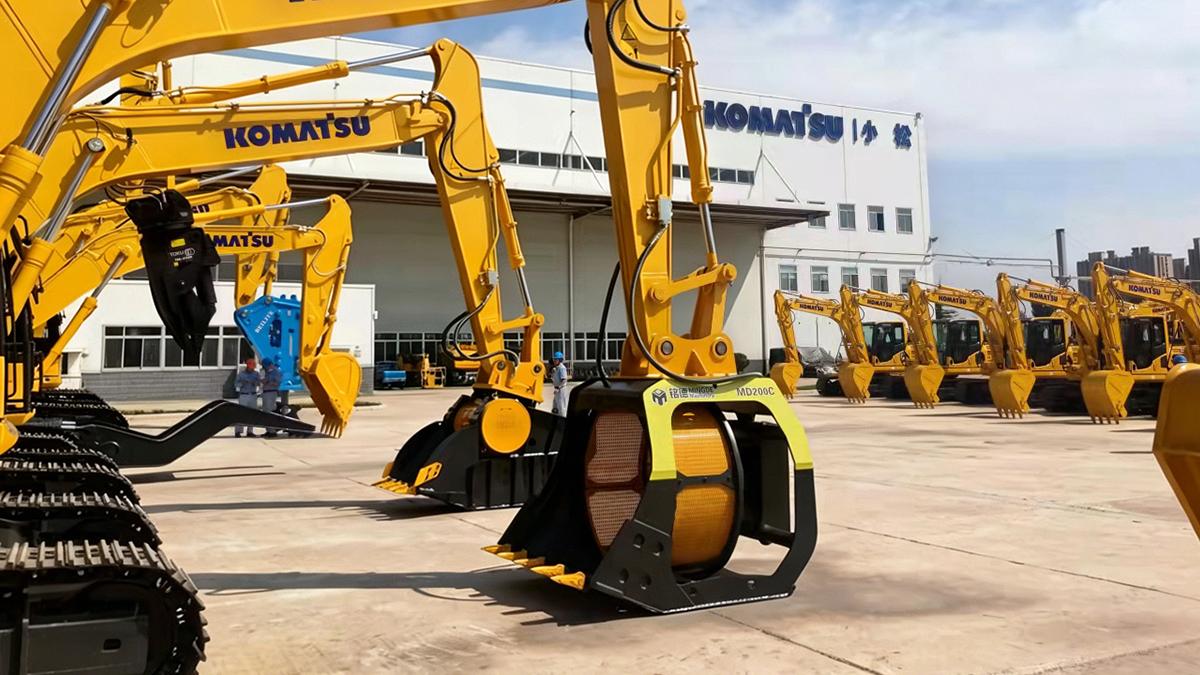
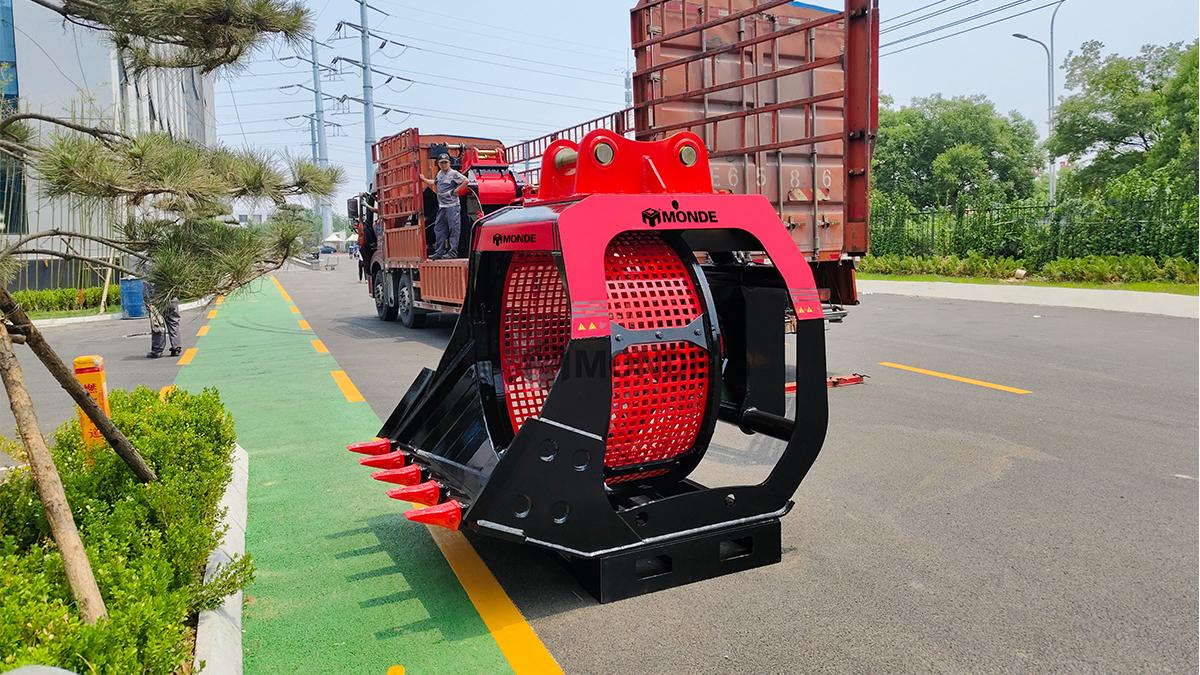
Hydraulic drum screens, also known as rotary screening buckets, are compatible with various excavator models. When material enters the drum assembly, a foot valve activates high-speed rotation, causing the material to tumble and roll. The screened product is discharged through the screens around the drum, while substandard material remains inside, achieving the desired screening effect. Its structure mainly includes a hydraulic motor, reducer, drum assembly, and frame.
Its advantages include:
1. Strong Screening Force: The rotary screening bucket utilizes the centrifugal force generated by its rotation to quickly grade materials. This centrifugal force results in a more uniform distribution of material on the screen surface, significantly improving screening efficiency and increasing output by 30% compared to similar models.
2. Higher Efficiency: The rotating screen design results in higher screening efficiency. The screen holes are less prone to clogging, further improving screening efficiency and making it suitable for various working environments.
3. Longer Lifespan: The screen mesh is made of high-strength, wear-resistant material. For special working conditions, it can be upgraded to a more advanced wear-resistant material, increasing the service life and compatibility of the screening bucket.
4. Customizable: The screen mesh is one of the core components of the rotary screening bucket. The screen mesh material and screen hole size can be selected according to different material characteristics and screening requirements, such as wear-resistant plates, high-strength plates, etc., to adapt to various working conditions.
5. Strong Adaptability: The rotary screening bucket can adapt to various harsh working environments, such as high humidity and high dust. Its design effectively prevents dust spillage during the screening process, protecting the operating environment and reducing material loss.
6. Easy Maintenance and Operation: The rotary screening bucket is designed with user-friendly operation in mind. Screen replacement is simple and quick, reducing downtime. At the same time, the equipment's control system is usually designed to be intuitive and easy to understand, allowing operators to quickly master it.
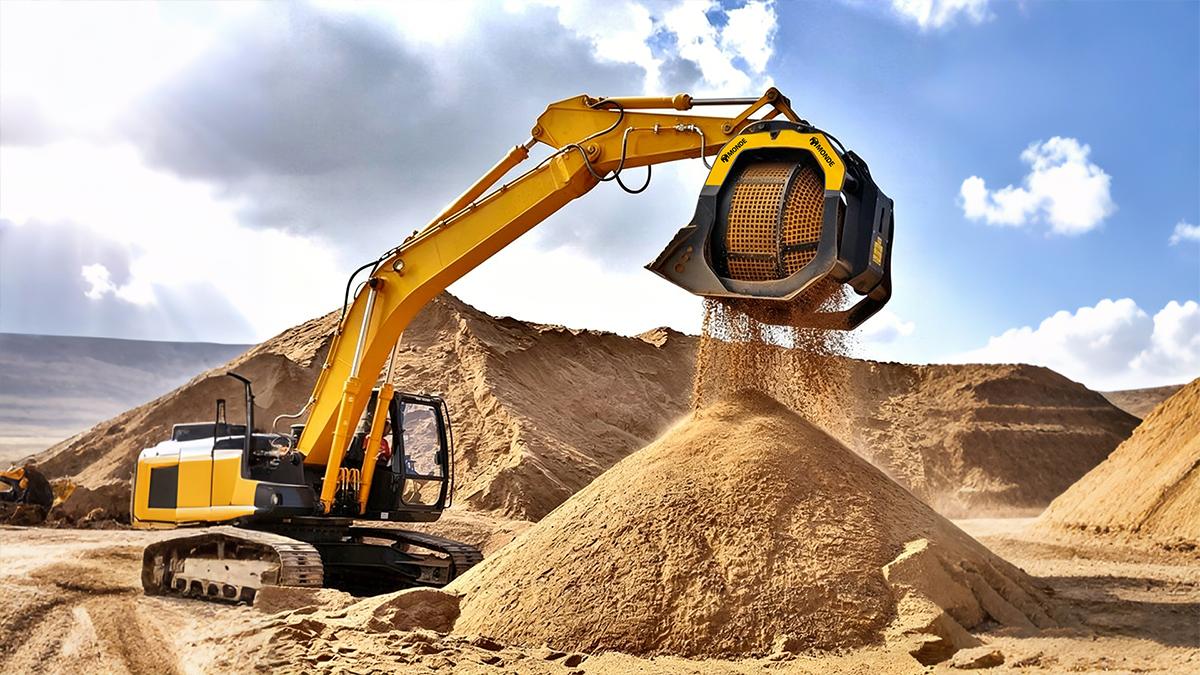
Compatible Excavator Tonnage: 2-50 tons
Applications:
1. In quarries, for grading stones of different sizes and separating soil and stone powder.
2. In sand and gravel quarries, for sand and gravel separation.
3. In the coal industry, for separating lump coal from coal powder and for coal washing (a component of coal washing machinery).
4. In the chemical and mineral processing industries, for grading large and small lumps and separating powdery substances.
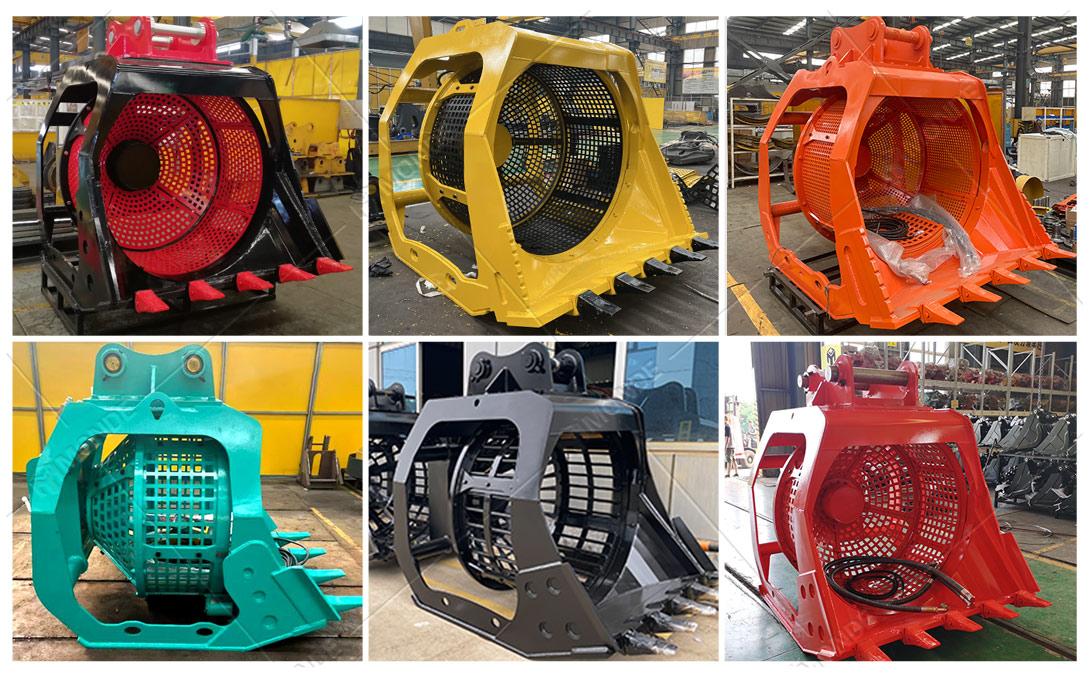
In summary, the rotary screening bucket has significant advantages such as small footprint, flexible design, screen holes that are not easily clogged, stable operation, simple structure, convenient maintenance, the screening cylinder can rotate in both directions, various screen hole specifications, high efficiency and large output, environmental protection and energy saving, hydraulic power transmission, all-around equipment, high wear-resistant materials, and wide applicability. These characteristics make it a highly efficient, economical, and environmentally friendly screening device.
As a highly efficient screening device, the rotary screening bucket not only improves the efficiency of material handling but also greatly reduces machine wear and tear and operational difficulty. Its diverse screen mesh sizes and fully enclosed design enable it to operate stably under various complex working conditions, making it an indispensable auxiliary device for excavators.